Online Dating Scams: A Multi-Billion-Dollar Industry
You think you’ve finally met someone special. Online, she seems warm, caring, and genuinely interested in you. She compliments you often, makes you feel valued, and appears eager to build a connection. Her profile photos show someone young, attractive, and believable.
But slowly, things start to feel off.
Before long, she encourages you to move the conversation off the dating site—usually to private email or another messaging app. Not long after that shift, her true intention surfaces: she needs money.
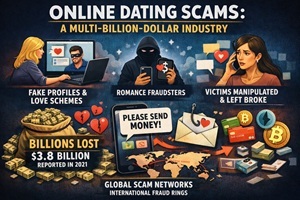
Sometimes it’s for a plane ticket so she can come see you. Other times, it’s framed as an urgent problem she can’t handle alone. That’s the basic pattern behind most online dating scams.
If you hesitate or refuse to send money, the pressure usually increases. The messages become more emotional and dramatic. Scammers often invent crises—sudden financial hardship, being robbed in another country, or a medical emergency that supposedly requires immediate help.
And if you do send money or share access to your bank account or credit cards, it rarely ends there. Almost always, the requests continue and grow larger.
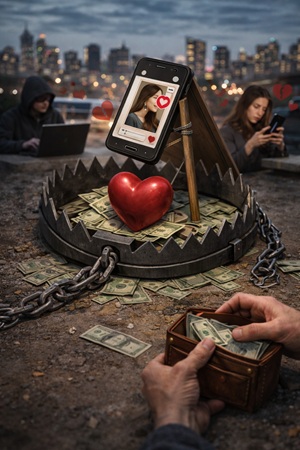
There’s a reason this happens. Romance scams are extremely profitable.
They aren’t random or disorganized operations. In many cases, they function like businesses, with clear hierarchies that include beginner scammers, supervisors, and higher-level organizers.
In some developing countries, internet cafés serve as informal offices where these scams are carried out. Because victims can be persuaded to send thousands—or even tens of thousands—of dollars, scammers often earn far more than they would in regular jobs.
Many scammers work scheduled shifts and follow carefully written scripts, much like call-center employees. This is why scam messages often sound strangely familiar or repetitive.
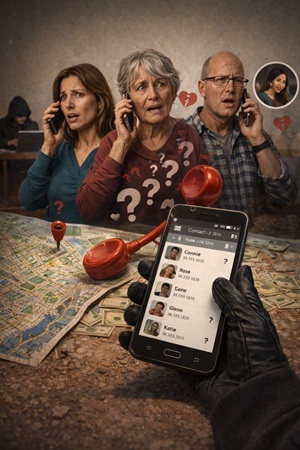
These scams are often run by teams of several people, which explains why details may change, conversations feel inconsistent, or you’re occasionally called by the wrong name.
One of the most troubling aspects of online dating scams is how deliberately victims are chosen. Scammers often target people they believe are emotionally vulnerable—widows, widowers, individuals going through divorce, or anyone who seems eager for a relationship to work.
Of course, not everyone you meet online is a scammer. Many people use dating platforms sincerely, hoping to build real relationships. Reputable dating sites work hard to screen users and reduce fraud.
Still, scammers are skilled at bypassing safeguards and exploiting trust.
The most important advice for anyone dating online is simple: stay alert. If someone seems too perfect, too attentive, or too good to be true, there’s often a reason.
A healthy dose of skepticism can save you from emotional pain—and serious financial loss.